Goldmund’s mother leaves home and eventually disappears
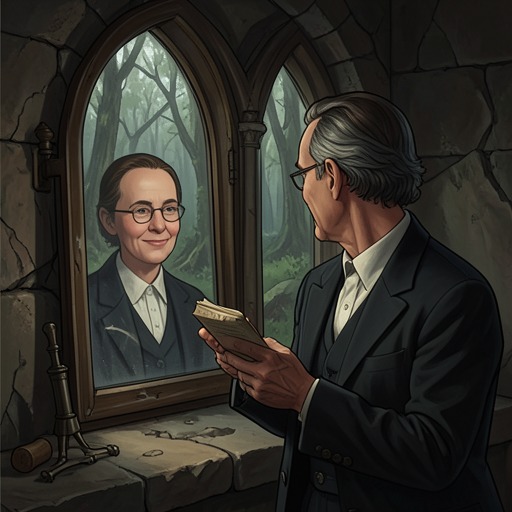
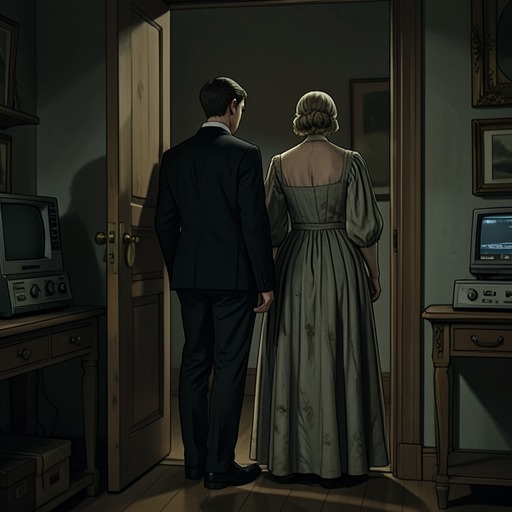
Narcissus and GoldmundGoldmund’s mother leaves home and eventually disappears, an absence first defined for him by his father’s account rather than by his own recovered memory. Her departure becomes the center of a family story of shame and alleged sin, while Goldmund’s father turns it into a reason for his son to devote his life to God. When Goldmund later remembers his mother as he once knew her, the contrast exposes how thoroughly that imposed story had obscured his past.
The Father’s Account
Goldmund’s father described his wife as a beautiful woman of noble but poor birth who had been a dancer. He said that he had rescued her from poverty and shame, arranged for her baptism and religious instruction because he could not be sure she was not a heathen, and married her in order to make her respectable. These details survive as the father’s version of events, not as an independent account of the mother’s life.
According to that version, after several years of settled domestic life she returned to her former ways, caused trouble, seduced men, and sometimes stayed away from home for days or weeks. Her reputation as a witch spread. Her husband went to find her and brought her back several times, but eventually she disappeared for good. The account gives no explanation of where she went or what became of her; disappearance, rather than a confirmed fate, is the limit of what Goldmund knows.
An Absence Made into Guilt
The father preferred not to speak of his wife, but his account persisted as a terrible legend, reinforced by servants’ stories and dark rumors. As he slowly recovered from what he regarded as years of disorder, fear, and shame, he raised Goldmund—who resembled his mother in features and build—with increasing nagging and bigotry. He taught his son that he must offer his life to God to expiate his mother’s sins, making her departure the basis for a religious obligation imposed on Goldmund.
This inherited account did not preserve the mother as Goldmund had experienced her. The real memory of her had almost vanished, replaced by the father’s image of an errant wife and the rumors that accumulated around her. Goldmund had learned to push that history aside and had told Narcissus almost nothing about his mother, a subject he understood to be forbidden and shameful.
The Lost Memory Returns
Goldmund’s later recollection reveals the distance between the father’s legend and the child’s experience. He recognizes that he had once loved his mother unconditionally and revered her above anyone else, but that the living image of her had gradually been darkened until it resembled the evil, pallid witch of his father’s story. Her disappearance therefore marks not only the end of her known life at home but also the loss of Goldmund’s own memory of her.
The episode gives the mother’s absence a lasting consequence without resolving her fate: her story shapes Goldmund’s upbringing, while his recovered memory challenges the shame attached to it. The distinction between what his father said and what Goldmund himself remembers makes the missing woman both a family secret and a measure of how paternal judgment had displaced his childhood past.